|
|
|||||||||||||
|
In 1854, when the Nebraska
Territory was opened for settlement, there was a sizable German Lutheran
colony around Quincy, Illinois. A
group of men from Quincy came to the Fontanelle area and laid out a town,
then went back to Illinois to bring out their families. Others soon followed and started moving
farther into the territory. Soon
after, Germans from Cook County, Illinois started arriving. In 1869, Mr. Fred Thies was the first to
settle in our area, and the following year a number of German Lutheran
families followed him. They suffered
many hardships to get here; and after arriving, these hardy Germans worked
hard to establish their families and farms and to nourish their faith. German Lutheran
missionaries had visited the area for several years, and in 1870, Rev. E. Julius Frese was called to minister to
the Logan Creek church, now St. John's of Hooper, and the Brown Greek church,
now St. Paul's of Arlington. The
distance between the two churches was over twenty miles by trail, with hardly
any bridges over rivers, and the few primitive ones were far apart. |
|||||||||||||
|
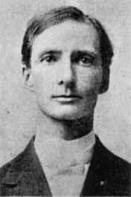
Pastor
E. Julius Frese
|
On his way between the two
churches, Pastor Frese was asked to preach to the group of settlers in our
area. Services were first held in
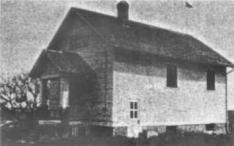
their homes, and then in the Tempe School, also known as the McMullen School. Travel to these services by
slowly moving farm wagons or horseback shows the importance these early
settlers placed on hearing God's
Word. In June of 1876, our congregation was organized. At that time, because
St. Paul's had called their own pastor, Rev. Frese served only Immanuel and
St. John's. |
Tempe (McMullen) School
|
|||||||||||
|
1876 - 1886 No minutes of voters
meetings are available until 1881, except for the minutes of August 11,
1878. They state that Mr. Heinrich
Rabe was given $5 for the tables and benches he provided the school. They also noted that, for $20, Mr. Louis
Mueller sold to the congregation an acre of land containing his family burial
ground, for use as the church cemetery.
This land is one mile south and one quarter mile west of the present
church and is now referred to as the "Old Cemetery". Because no records exist
for those first few years, the "founding fathers" of our church are
not known. In 1878, the names listed
on the minutes are: Rev. E. J. Frese,
H. Katt, F. Borcherding, Ernest Panning, Louis Moll, Louis Mueller, Heinrich
Walter, and Heinrich L. Krohn. Also
Friedrick Roeber, Carl Krakow, Mr. W. Meyer, Christoph Hinrichs, Heinrich
Welling Sr. and Henry Rabe were received into membership at that meeting. |
|||||||||||||
|
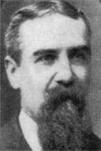
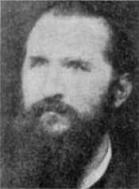
Pastor W. A. Bergt |
In 1879 Pastor Frese
accepted a call to Omaha, and Rev. W.
A. Bergt was called to serve the two congregations. He helped our Immanuel
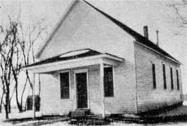
congregation build their first church in 1880. It was built on land purchased for $1 00 from Mr. and Mrs.
Henry Mosel. The land, where our
present school is located, was about one mile east and one mile north of the
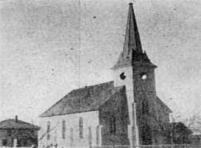
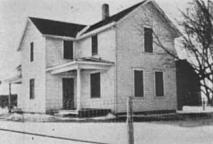
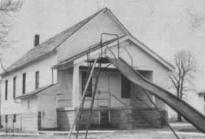
McMullen School. The church building
would also house the school during the week, and had the parsonage attached. |
||||||||||||
|
First church, school and parsonage
|
Rev. Frese came back to preach the dedicatory
sermon. What an accomplishment for
these people who were starting their lives over again in a new country and
had only been in Nebraska a few years! In 1881, shortly after the
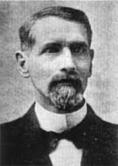
first of the year, Rev. August Hofius
was installed as Immanuel's first resident pastor. His salary was $400 a year and he had to buy his own fuel, but
the congregation would deliver it.
Seventy-five dollars was raised for a barn, a well, his traveling
expenses, and four tons of coal for the church. It must have been a joyous time for the people who could now
hear God's Word every Sunday, have a pastor to teach their children every
day, and to be present for all their spiritual needs. |
||||||||||||
|
Pastor August Hofius 1881-1898 |
Voters meetings were held quarterly, with a
special meeting at the beginning of each year. At the start
of each meeting, a chairman
was elected and three members were chosen to audit the finances. Each purchase and expense was funded by a
pledge list prepared by an appointed member, who collected the pledges. Some meetings had several members passing
pledge lists. The elders took special
collections on Communion Sundays, Easter and Christmas, besides the money
collected in the "Kiingelbeuta I" each Sunday. At each voter's meeting it was decided
where to send the collections that were not used for the regular expenses of
the church. At the November 24, 1881
voters meeting, the following members were entitled to vote: H. Rabe, L.
Mueller, Ch. Niebuhr, H. Mosel, Jr.,
H. Mosel, Sr., G. Kuhls, H. Lallmann, F. Wolf, Ch. Weseloh, H. Hinnerichs, J. Moll, A. Hagerbaumer, H. Walter, D.
Bartling, F. Thies, W. Dierks, J. Happel, H. Bohling, W. Stuenkel, H. Panning, W.
Walter, C. Krakow, F. Panning, W. Boldt, and C. Geisler. It was resolved that this congregation
would hereafter be called "The German Evangelical Lutheran Immanuel
Congregation in Sheriden Precinct and vicinity" Washington County,
Nebraska. The articles of confession were adopted. The first elected trustees
were Heinrich Panning, Dietrich Bartling and Christoph Niebuhr. |
||||||||||||
|
In 1882, our congregation
joined the Evangelical Lutheran Synod of Missouri, Ohio, and other States, now
known as the Lutheran Church - Missouri Synod. That same year the bell that
we still ring today was purchased for the church. In 1884, the first elected
elders were Louis Mueller, Heinrich Rabe and Wilhelm Stuenkel. During the
first ten years, the parsonage was added on to, the windows repaired to keep
the rain out, and a summer kitchen was built. Cemetery lots cost $10, the
trustees were given permission to buy a shovel for the church, and Henry Moll
was paid $10 a year to be janitor. A special collection was taken to help
build a new college in St. Louis, and the weekly collection often went to
help needy seminary students. The young people of the congregation donated
kerosene lamps to the church |
New frame church 1890
|
||||||||||||
|
1887 - 1896 At the January voters
meeting the trustees reported an income of $90.35 and expenses of $87.70. The
elders reported that $454.54 had been received for Pastor's salary and income
for coal was $24.00 with 25 cents left from last year. With a resident pastor, the congregation
grew rapidly. A number of St. John's
congregation joined ours when their church was moved several miles northwest;
and soon our church was too small to accommodate all the people. In 1889, the decision was made to build a
new church. Land across the road,
north of the church and school, was purchased for $240 from Mr. Adolph
Hagerbaumer. This new church, with its
soaring steeple, costing $4,737, was 68 x 38 feet, had a balcony, and seated
375 people. The benches on both sides
were 9 feet long and the ones in the middle were 10 feet. The chimney was painted the same color as
the roof, and the steeple was topped with a cross. The building was placed near the corner and faced east Pastors
Bergt and Frese delivered the dedicatory sermons in 1890. Pastor's salary had risen
to $500, a 26x28x14 barn was built for $357 and the congregation drew up a
special pledge list for a member who was in deep financial need due to
doctor's bills. Mr. H. Mosel, Sr.
received $25 for being janitor during 1892.
In 1893, the new church had to be repaired because a severe windstorm
damaged the plaster. At the same time, the fence
around the church and the school floor were repaired. Hitching posts for the horses were placed
near the church. In 1894, Pastor
received a $1 00 raise in salary. A
cistern, 16 feet deep and 8 feet wide, was dug for the parsonage. The 1896 Christmas Eve sacks of candy cost
$23, hooks were installed in the classroom for the students'hats and coats,
and $1.00 of the Klingelbeutel money was given to the Free Church in Denmark. 1897 - 1906 The congregation was called
upon to consider sending a donation for the construction of a college in
Seward. We also joined with area
churches to construct and help support an Orphanage in Fremont. Up to now, Pastor Hofius had also served
as secretary for the congregational meetings; but in 1898, Mr. Daniel Timm
became the first lay secretary That year Pastor Hofius accepted a call to
Pierce, Nebraska, and Pastor John Lang accepted the call to Immanuel at a
salary of $600. An organ was
purchased for $500 that year, and replaced one that had been loaned to the
congregation. |
|||||||||||||
|
Pastor John Lang 1898-1927 |
Another severe storm heavily
damaged the chimney of the church, so repairs again had to be made. One hundred Mulberry trees were planted on
church grounds, the parsonage got a telephone, and two acres were set aside
for a new cemetery north of the church grounds. In June 1901, the congregation celebrated the 25th anniversary
of the founding of Immanuel Lutheran Church in connection with a Mission
Festival. Former pastors were invited
to preach, and a large crowd attended from area churches. In 1902 Teacher William
Seitz was called, at a salary of $300, to relieve Pastor of his teaching
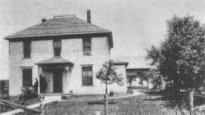
duties. TWO years later, a new
parsonage was built west of the church for $2,200, and a barn was built for
$472. The 22 stalls in the barn were
sold to the members. |
||||||||||||
|
|
Parsonage 1904
|
The 4th of July picnic was
held in Mr. Hagerbaumer's grove. In years that the 4th fell on a Sunday, the
picnic was held on the 5th. In 1906
Teacher Seitz left and Fred Vonderlage was called. Also that year, a furnace was put in the church, and the three
big lack stoves were removed Members dug out the basement with each man
devoting a day to the project. |
|||||||||||
|
Principal Fred
Vonderlage 1905 -1941 |
1907 - 1916 Pastor and Teacher were each
given a $1 00 raise, and Pastor was given several weeks vacation for health
reasons. A Reed organ was purchased
for school and screens put on the school's and teacher's windows. The church, school and teacher's home were
painted, a sidewalk of planks was put from school to the outhouse, and the
parsonage was provided with a ceiling for the porch. The ladies of the congregation were given
the honor of collecting for the new wallpaper to be put in church. At one
voter’s meeting it was decided that half of the Klingelbeutal money would go
for circuit riders and the other half to Synod. They also decided to
introduce the Synodical Catechism in school. One year the 4th of July
committee had received $250, but was short $26 to meet expenses; therefore a
list for pledges was passed around. At another meeting, each member present
was asked to give a dollar to cover a shortage, and sometimes they just
passed the hat. In 1909 the steps leading up to the confirmation room were
provided with a railing and the hallway was papered. Four panes were replaced
in the church windows and all the panes in the round window were replaced
with clear glass. |
||||||||||||
|
In 1910, after much
discussion, it was decided that a church could be built in Winslow, and later
the members of that congregation were released after promising that they
would remain true to the pure doctrine. It was also decided that the young
women of the congregation could decorate the altar, and that the fence at
church should be removed, School began on the first Monday in September in
1911, and would end the first Friday in June. It was decided to add some important Bible passages, some
portions of the English Catechism and some prayers to the memory work
assigned to the pupils. |
|||||||||||||
|
Teacher's House 1915
|
In 1913 the voters chose to
have the liturgy sung to a different tune, and the Mission Festival sermon
was given in English. Since 1909
Pastor would preach a German service and then one in English right after. Funerals were still in German. A picnic was held on Pentecost Monday and
ten dollars w allowed for gifts for the children. The teacher was given three weeks vacation and Mr. E. Stuenkel
was elected as janitor and would also pump the organ. A fence was built around Pastor's potato
patch. Because the Winslow church
had no cemetery, it was decided their members could still bury their dead in
our cemetery. The last two years of
this decade was full of activity. The
congregation celebrated the 25th year of the dedication of our church
building, the barns near the school were removed, and a new teacher's house
was built with steps, a sidewalk, and a fence installed. |
||||||||||||
|
Pastor Lang urged the
members that, whenever possible, baptisms be done in church with the fine
baptismal service available. Many
children were baptized in their homes in those days because of distances to
be traveled. Horses could make only
slow progress through snow-covered, frozen, or muddy roads, so it was often
inadvisable to drive a new baby to church to be baptized. It was decided at the next Mission
Festival the congregation would share in a common meal in the schoolhouse and
fifty folding chairs were purchased. 1917 - 1926 Church renovations included
adding a metallic ceiling, repapering, installation of a window in the
chancel, new front doors, chimneys removed, and the building wired for
electricity. A generator was
purchased from Mr. George Heine and placed near the furnace. The lighting was not as bright as we have
it today, but it was an improvement.
The kerosene lamps were donated to a poor congregation. It was decided that the Fresco painter was
not to paint any "Passages" in church. A garage was built for pastor, and both he and the teacher
received a salary of $1 000 a year. English Hymnals and Bibles
were bought, with each member paying for their own, and 25 extras ordered for
the church. The young people would
sing in English and the older people would sing in German at the same time. Three members were appointed to "take
note of what the members in the congregation were doing for the
war". School became 1 00% Junior
Red Cross. It was decided that
Pastor, Teacher, and Mr. William Hartung would go to Lincoln to defend our
school should it be attacked in the legislature. German services were still held, because we never heard
differently from the Americanization Board. In 1919, English services
were held one Sunday out of four, and confirmation was in English from then
on, The delegates to the convention in Seward reported that the following was
emphasized: more students for Seward, more loans for church building fund,
collection for payment of debt in Seward, and pastors and teachers were to be
asked whether their salaries were sufficient in these hard times. A collection of $235 was sent to the needy
in Germany and Austria. In 1921,
there was a surplus in the treasury, so Pastor and Teacher were each given a
$50 gift and it was decided to provide them with feed. In August 1922, the
congregation celebrated the 25th anniversary of Mr. Vonderlage in the
teaching ministry. A gift of $1 00
was given to him, and pop, ice cream, and cigars were served free of
charge. Mr. Julius Hartung was now janitor,
receiving $1 00 a year, and Teacher Vonderlage received $30 as engineer for
the light plant. Members of the
church were urged to bring feed for the Pastor's and Teacher's cows and
chickens, as they were running short In 1924, a gift of $264 was given to
Pastor Lang during the celebration of his 25 years of ministry in our congregation. Expenses for the past year were $3,722,
with a debt of $96, which was covered by pledges. A pledge list was also passed for coal. English services were held every other
Sunday. Pastor Lang was given six
weeks vacation, and the teacher's house got a bathtub. Food, collected once or twice a year, was
sent to the Fremont Orphanage. Often
it was stored at Henry Hagerbaurner's until it could be taken to Fremont. |
|||||||||||||
|
The congregation's 50th anniversary
celebration was held in the grove in 1926.
Members of Winslow, Blair, and Fremont congregations, as well as St.
Paul's and St. John's, were invited.
Preachers were Pastors Frese, Hofius, and Bergt. Guests were served buns and coffee. The Telebasta band provided the
entertainment. The stand showed a
profit of $1.85, but the ice and band hadn't been paid for yet. 1927 - 1936 The beginning of these 10
years was very busy. Electricity was
installed in the parsonage and teacher's house and a fence with a big arch
was selected for the cemetery.
Because the church did not have a social room, the new basement under
the school became the social room for the organizations and gatherings. |
Remodeled School 1927
|
||||||||||||
|
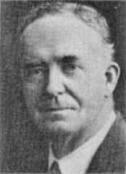
Pastor Lang announced he
was leaving due to failing health, but stayed to install Rev. Ernest Eckhardt on Nov. 6, 1927. Pastor Eckhardt described his arrival in
his book, The Lives of Two Men: "Our Scottsbluff congregation not only
gave a farewell with blessings and gifts, but helped in packing and loading
the freight car. Since there was
ample room, it was decided to also ship the Model T Ford and we travel by
train .... Since the freight car was shipped several days ahead of our
departure for Hooper, ft was there as our passenger train arrived. What a thrill, what excitement when the
conductor called out, 'Hooper, next stop!' Many thoughts flashed through our
minds, 'Who will be at the station to receive us? How does the church look?
What kind of a house is it? How does the property look?' The train came to a
stop. Looking out of the window, we
noticed the whole platform full of people.
Surely Hooper was not such a large city! But to our surprise, we soon found out that most of them were
to be my members. There was the
teacher, the elders, the trustees, and a number of others. What a reception! After the introductions, I went to our
Model T, which had already been unloaded from the freight car and filled with
gas. Teacher Voriderlage took the rest
of the family in his Chevrolet Wan and drove ahead in order to show the way
to the parish. The sixth mile and the
last hill came and gradually revealed the church steeple with the cross
Having come from small mission congregations, the large frame church with
balcony made a great impression upon us' One wonders what impression
the house had on them. Even though
the nine-room house had ample room for the family of five, it had no furnace,
no running water, nor a basement, The congregation did everything they could
to help the new pastor and his family settle in. One day he was putting together his simple bookshelves made
from old boards he had from his first residency. Elder, Mr. Julius Hartung, came in, saw what he was doing, and
told him to stop and wait till he could tell the congregation about it. Soon Pastor's study had a large and very
attractive bookcase with glass doors.
They were also given 'a fine red cow and even a red hog, and people
kept asking, 'Do you have room for another chicken?"' |
|||||||||||||
|
Pastor Ernest Eckhardt 1927-1966 |
In 1928, Immanuel hosted
the Northern Nebraska District Convention for the first time during its
existence. A large tent seating 1,200
was rented for the day. That same year,
a finance committee and ushers were elected for the first time. George Schuett and H. P. Bartling were the
first ushers. A pledge list was drawn
up to cover the debt from 1927 of $2,400.
The budget for Synod was $1,800 and Pastor and Teacher each received
$1,250 salary. English liturgy was
introduced, a hymn board was installed. and in 1929, the first English
constitution was accepted, with the word 'German' deleted from the name of
the congregation. Average English
attendance was 320 and on German Sundays, 270. Very muddy roads often kept people from church, but one Sunday
a member was so determined to get to church that he walked two miles. |
||||||||||||
|
In 1930, the congregation observed
the 400th anniversary of the acceptance of the Augsburg Confession. The
barns, which were in disrepair, were torn down and smaller ones built. Many men turned out to help, including
elderly Christian Oerman and Henry Scheer, who were found shingling on top of
a barn. A rest room was built in the
northeast corner of church. The
parsonage was raised, a full basement was put under it, and a bathtub was
installed. For a number of years,
there was no running water in the house.
Water was carried in, which was very difficult at times, especially
during a blizzard when the drifts were two to five feet high, often covering
the entire pump. Also, until a
furnace was installed, five black stoves had to be fed with cobs, wood. and
coal to keep everyone warm. Members
took turns cutting the lawns, but later the Walther League took on this
job. Family Christmas bags of nuts,
candy, and fruit were still given out, besides the ones given to the
children. They were dropped one year.
and some grumbling in German could be heard because they didn't get their
bags. In 1931, Pastor Eckhardt
started a monthly bulletin, called "Immanuel Lutheran Messenger"
that church members subscribed to for 25 cents a year and received in the
mail. He would list the past month's
church attendance and the dates for the next month's meetings and special
events. There would be items about
new babies, weddings or anniversaries, a mention of people sick or
recovering, and organizational activities.
It there had been a funeral, there would be a listing of memorials
given. The Messenger also included
many inspirational articles. That
year a Dorcas Society was formed by some of the young ladies of the congregation. They had a membership fee of 25 cents and
monthly dues of 10 cents. One of
their activities was making quilts to raise funds for missionary work. They had an annual picnic and sometimes
had wiener roasts to which they invited the Walther League. In June of 1933 they dissolved due to the
declining membership because of marriages, and the lack of new members. Though this community was
predominantly Lutheran with very few non-church families, Pastor Eckhardt
felt mission work was needed now that English services were started in the
church. For several summers he
offered a Vacation Bible School in the public school, and later in Emil
Krohn's home, for the children of families with no church of their own. Even though money was tight and he had to
pay for his own car expenses, he would travel around and gather the children
until his car was so full that some had to sit, on the trunk, in order that
they have the chance to learn about Christ. For many years, children
were given Catechism lessons every Sunday for ten minutes after the
sermon. The English Catechism was
used, which was of great importance for the parents who had learned
everything in German. Because of
this, the children sat in the front pews, which gave the parents a good view
of the behavior of their children. On
Communion Sundays, a Confessional service was held half an hour before the
start of the regular service. The
congregation purchased 100 Bibles so that each person attending the Sunday
morning Bible class or the various organization meetings could benefit by studying
the Scriptures. In 1933, Mr. Ludwig
Bartling, Sr., had served the congregation as an elder for 47 years, and Mr.
Henry Kuhis had served 20 years as a trustee. Mission Festivals were
always big days, with two or three services held. Neighboring congregations would be invited, and they would drop
their Sunday service and urge their members to come here. We would do the same for them. We held these services In the grove north
of the church to accommodate a large crowd, and the ladies of the
congregation would serve a noon meal-free, of course! It required considerable work to properly
feed several hundred. In 1934, we had
an attendance of 1,412. Guest speakers would preach
in the morning and afternoon. In
Pastor Eckhardt's book, he tells of a speaker who had not arrived when it was
time for a service, so he started, wondering what he should do if the speaker
didn't come. As the congregation
started the first hymn, the speaker arrived.
Hurriedly the pastor took off his coat, put on his gown, looked up the
liturgy, and as the last stanza was being sung, hastened to the front of the
altar. In his haste, he forgot to
take off his straw hat, so there he stood, ready to open the service in the
name of the Lord, when he suddenly realized that he was a little top-heavy
and quickly removed his hat. In the 30's, drought spread
across our country. Once, we sent a
total of 53 sacks of grain and potatoes, I 1 sacks of flour and 12 boxes of
clothing to aid families in South Dakota.
Soon after, the drought and grasshoppers also affected us. In 1936, members dug a trench for ensilage
to feed the Pastor's and Teacher's cows, but not enough cornstalks could be
found to fill ft. One year Pastor
couldn't afford to take his family for a little vacation because of the
expensive feed for the cow. For several
years, the voters tried to raise enough money to paint the church, but
couldn't get enough funds and would drop it until the next year or two. Finally, in 1936 the members painted the
church. Mr. Henry Beerman was in
charge, Mr. Louis Moll mixed paint, and Mr. Emil Niebuhr tended to the'
"dizzy" heights. Ten men
painted each day for four days. It is unknown when the
first wedding was held in the church Instead of the bride's home. When they did start having weddings in the
church, the bridal couple and attendants were seated on special chairs during
the service. But one young lady had a
beautiful train on her wedding dress and didn't want it to get wrinkled, so
she insisted that they stand because that was what was done in other
churches. From then on, the wedding
party stood at the altar during the entire service. At weddings and anniversaries, it was the custom to take a
collection, which was usually given to missions. Collections were also taken
at funerals. Several funerals had 600
to 700 in attendance; nearly double the number at a regular church
service. The undertaker was asked not
to play phonograph records before the funeral, but appropriate organ music
could be played. upon the death of a member, the church bell would be rung
the number of years of the life of the deceased. The pastor also rang the church bell every Saturday evening at
sundown to remind the people of the coming Lord's Day, and it was rung an
hour before church in the morning. 1937 - 1946 Our church membership was
455 and communicant members totaled 352.
There were 54 children in the congregation of school age, and of
these, 32 attended our day school.
There was an average English attendance of 304, and 230 for German
services. |
|||||||||||||
|
Each month Pastor preached
three English services and one German service, with an English service
immediately following. The congregation finally gave permission to start a
Sunday school for the children who didn't attend our day school. They had
been afraid it would cause the eventual closing of the school, but both have
thrived. Also that year, the sons of Mr. and Mrs. Emil Krohn were given $10
to pump the pipe organ. Rev. A Bringawatt of the Fremont Orphanage was called
to be assistant pastor with
a pay of $1.50 for each trip to assist at English Communion and $3 when a
sermon was delivered. He served until he accepted a call to Omaha in 1944. In
1940, we celebrated the 50th anniversary of our church dedication. In 1941, Teacher Vonderlage
resigned after having served as teacher, organist, choir director and janitor
for 36 years. Often, at special occasions, he was called upon to sing and he
also directed the Men's Octet. Mr. Alvin Brandhorst was called to teach at a
salary of $1,000 a year. The school board collected money from the members
for the teacher to purchase a 'GOOD' cow. Allard Barding was the
first member of our congregation to leave for World War II. A $1,000 memorial
was given to help fund the $2,600 organ, which was dedicated with a special
concert in 1942, |
Principal Alvin Brandhorst 1941-1944 |
||||||||||||
|
The old organ was sold to a
church in Scribner. Several special
collections were taken for our Lutheran men in the Army and Navy and for the
Red Cross. German services were
dropped as attendance had dropped to less than 100 each service; and it was
decided to celebrate Communion every month.
Easter was on April 25 that year, the first time in 100 years that it
fell so late in April. Bad roads
still provided a hardship getting to church, and there were only 38 in
attendance on June 13, 1942 because of all the rain we had received. A German proverb states,
'Every beginning is difficult." This also proved to be so when a new
church building was being proposed.
Finally, in 1942, our congregation resolved to establish a Church
Building Fund. A committee consisting
of Herman Timme. Art Hagerbaumer, and
Howard Kuss was established to collect a free-will offering from each family
each year for the fund, All societies of the congregation were urged to
participate in the fund raising; however, it would be done without any public
money-raising schemes. The
contributions would come from our own pockets and be given out of love for
Christ. Members were encouraged to
buy war bonds to help the government and later, when they were redeemed, it
would help the congregation and fulfill their pledges for the building
fund. The 1943 budget items included
Synod $1,650, Pastor $1,400 and Teacher $1,150. In 1944 the budget was I set at $6,100. Pastor announced he had no
objection to 4-H as long as religion was left out, and admonished members to
be extra careful when selecting pallbearers at funerals in our church. In 1944, Pastor's report to the voters showed
communion held 11 times with 1,546 partaking, general membership 446,
communion membership 346 and voting membership 110. Day school numbered 26 and Sunday school 20. Upon request of our
government, we sent several boxes of religious books and Christian literature
to be distributed to the World War II German inmates in the prison camps in
this country. Pastor offered $5 to our Sunday school teachers for each adult
gained for the adult catechumen class.
For several months in 1944, all organizations of the congregation
cancelled their meeting because of the critical time for transportation
during the war when gas and tires were rationed. Pastor found out that ministers were exempt from tire
rationing, as doctors were, when a dealer offered to sell him new tires when he
needed them. Teacher Brandhorst left
in 1944, and Teacher Walter Firnhaber was installed. We redecorated the church at a cost of
$750. |
|||||||||||||
|
Principal Walter Firnhaber 1944-1953 |
From the beginning of the
congregation, the men sat on the left side, facing the altar, and the women
on the right side. Woe unto any woman who would sit with her husband on the
south side, which the older men had occupied for so long without the smell of
ladies' perfume to counteract the fragrant smell of grandpa's smoking and
chewing tobacco. There would be much conversation going on before and
sometimes during the service. It was decided that if the congregation
dispensed with this custom, and husbands sat with their wives, a more
worshipful atmosphere would prevail. After all, "what would be left to
say by husband and wife, having seen each other all week." In 1944, a
resolution was passed stating that the congregation did not object to mixed
attendance at communion, and from then on, the men and women sat together. In
1945, the congregation resolved to dispense with the old custom of
communicants walking around the altar to receive the wine, after having
partaken of the bread. Because it was very inconvenient for the communicants
to kneel down properly in our church, it was decided that we should confess
our sins with bowed heads while standing. |
||||||||||||
|
In April 1945, terms were
set for the length of time a person could be re-elected to an office or
committee. Mr. Emil Niebuhr asked to
be relieved of his treasurer duties, which he had held for 20 years, and Ted
Panning was elected the new treasurer.
Our church had two boys at the St. Louis Seminary, Paul Krohn and
Eugene Eckhardt. It was decided to dispense
with the playing of the organ during the speaking of the Lord's Prayer. Surplus funds of $500 were used to
purchase a motion picture projection machine; and for a while, tickets were
sold for the pictures, but later a free-will offering was taken. Our congregation's 70th year again had us
busy remodeling. A basement was dug
under the teacher's house and an addition built on for a new kitchen. Both houses received electric hot water
heaters, septic tanks, and stools.
Sidewalks were put in from the church to the parsonage and from church
to the cemetery. A special collection
was held for relief in Europe and China, and $70 of surplus funds was used to
ship clothing and canned goods overseas. 1947 - 1966 From the budget surplus,
$400 was sent to Fremont Orphanage, $300 to Seward Teachers College, and $1
00 to Lutheran University. Furnaces,
large enough to heat all the rooms, were installed in the two houses. Ione
Oerman started to teach Sunday school so Mr. Firnhaber could take care of the
church furnace before services. Two
more ushers were elected to gather the Sunday collection instead of the
elders. In 1948, the last three rows
of pews on the main floor were reserved for families with small children; and
a heater was offered for a trial period in the baby room. In 1950, the congregation
decided to have two years of confirmation instruction instead of just
one. Soon after, weekday confirmation
classes were started for the member's children not attending our school. Pastor taught all these classes in an
upstairs room in his house. Also in
1950, the congregation decided to begin building a now church, having
collected $62,000 towards the cost.
The building committee was Herman Hoegermeyer, Harvey Hagerbaumer,
Henry Hartung, Clarence Branded and Paul Kuh1s. |
|||||||||||||
|
New Brick Church 1952
|
On Easter Sunday 1951, a
ground breaking service was held. The
old church was moved northwest of the present site so the basement of the new
one could be dug. During the moving
process, services we re held at Hooper High School. Our 75th Anniversary was celebrated with the laying of the
cornerstone of the new church. We had
two services with special speakers, and the collection for the day was
reserved for a special item for the new church. As soon as the old church was settled, we again held services
there. When the social room of the
new church was completed, we moved our services into it. On May 11, 1952 our new
church, costing approximately $150,000, was dedicated. Two services with special speakers were
held and a hot ham dinner was served to over 900. Many area pastors and visitors were in attendance. An afternoon lunch was served to
approximately 500; both meals prepared by the ladies of the
congregation. The Ladies Aid donated
the altar and the Walther League donated the pulpit. The belfry of the new church was equipped
with an amplifier, which was connected to a record player in the church. From here, hymns would be played, which on
a quiet day, could be heard several miles away. Christmas carols would be played on Christmas Eve as the people
came to church, and appropriate hymns would be played after a funeral as the
people walked to the cemetery. |
||||||||||||
|
Though the church was
completed and dedicated, it was not debt free. It took a number of years of soliciting and special offerings
before it could be announced that all loans had been taken care of, Most of
the money had been borrowed from the members at 5% interest. Only about $20,000 was borrowed from a
bank. The interest money received by
the members often was used to give a bigger contribution towards the
debt. The budget for that year was at
$13,407, including the salary of $1,800 for a second teacher. The old church was torn down and the
lumber auctioned. We held a special
collection for the South Sioux City flood relief, and two drives for the
building fund, with a final debt of about $45,000. In 1953 a church council
was formed, a Sunday bulletin was started and Pastor's "Lutheran
Messenger" was dropped. A
Financial Secretary position was created to oversee the envelope system,
which was adopted for collections.
Mr. Firnhaber accepted a call to Osmond, Nebraska, and Miss Janice
Gerhard was called for two years to teach the upper grades. In April of that year we again hosted the
Northern Regional Conference, as we had several times in the past. Often it would rain when it was our turn
to host it, so during a dry spell some members were once heard to say,
"We better have a conference again in our church." It was decided the Ladies Aid would only serve at sales for the congregation members; and that non-voting members could be elected ushers. Pastor admonished the men "not to work in the field on Sunday, unless absolutely necessary, and then never unless they had first attended church." In 1955 Teacher Arthur Albrecht was called at a salary of $2,750, and he would receive a month's vacation. |
|||||||||||||
|
1957 - 1966 In 1957 we celebrated
Pastor's 30 years at our congregation. The ladies of our church were given
permission to clean the social room three times a year. By 1958 the building
debt was down to $15,400, The three outside church doors were replaced and
the front doors repainted. Storm windows were put on the lower floors of the
houses and 20 Austrian Pines were planted as a cemetery border. Esther
Pawling was asked to clean the church rest rooms, and the parents of school
children would clean the school's. Members were asked to advertise property
for rent or sale through the church to try to keep Lutheran property in
Lutheran hands, and thus strengthen our congregation. |
Principal Arthur Albrecht 1955-1963 |
||||||||||||
|
A church budget of $20,165 for
1960 was presented and Pastor reported that of the 115 children baptized in
the last 12 years, 64 are still in the community and 53 are of school
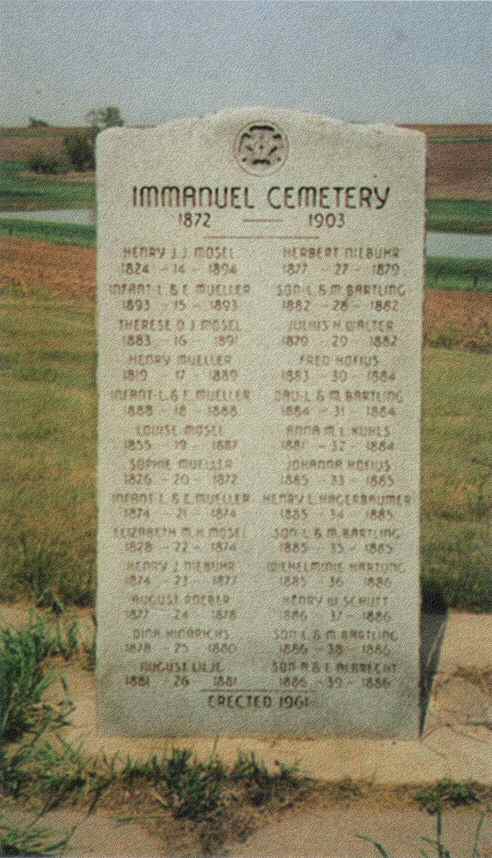
age. Attention was given to the old
cemetery on Orlando Mueller's land.
Graves were moved, a blueprint made of the grave locations, a plaque
put up with the names and dates on it, and the ground was seeded and
fenced. A brief history of the
cemetery was inserted in the voter's minutes for future generations to have. More than 50 people are buried there, but
it was abandoned in 1903 to start the cemetery next to the church. |
|||||||||||||
|
Old Cemetery
(Click image to enlarge) |
On June 14, 1961, a
mortgage burning for the church debt took place during a special service, and
in July it was resolved to build a new school as $13,000 in pledges had been
received. The dedication service was
in September 1962. Mission Sunday was
changed from the third Sunday in August to the second Sunday in October, a
telephone installed in the school, and the congregation decided to pay the
electricity for the two houses. The
Christmas bags that year held candy bars and fruit instead of the usual
Christmas candies and nuts. In 1963 St. Paul's in Winslow
closed their doors, and a number of the members transferred to Immanuel,
increasing our membership to 398 and 315 communicants. Teacher Albrecht accepted a call to
Naperville, Illinois, and Mr. Mervin Dehning accepted our call for a salary
of $3,700. We decided to furnish all
utilities for Pastor and Teacher. The voters decided tobacco
products would no longer be sold at church functions. A Finance Committee of
four members was created to count and record the contribution envelopes and
report to the Financial Secretary. An honorary roll of voting members who
cannot attend meetings because of permanent disability was created. The new
lower room teacher was hired at a salary of $3,000. We adopted Synods
retirement plan for ministers and lay workers and the Synod Welfare plan. |
||||||||||||
|
Pastor Eckhardt indicated
his wish to retire, but was persuaded to stay on so we could celebrate with
him his 45 years in the ministry. Therefore, on December 31, 1965, he retired
after serving Immanuel 38 years. In his book, Pastor recalled the process of
moving to Fremont: “Having lived in a nine-room house for 38 years, many
things accumulated which we no longer needed and could not use in a new and
much smaller house.” At the suggestion of a member, who also was moving to
Fremont, our unwanted goods were added to his and placed on sale. Again
kindness was shown to my wife and me when a number of ladies helped clean the
new home prior to moving in. Then came moving day at
which time men and women appeared to help load all we still had on several
trucks to be taken to Fremont. One
could call it a joyful party for there was much laughter and fun. Yes, there were even some men who were
filled with youthful mischief and took the labels off of six cans of groceries
and destroyed them. They were caught
in the act, and now a guessing contest ensued. Looking at the price on the can and feeling the weight, we
thought we knew what the contents were, but a number of times our guess was
wrong. For instance, one morning we
thought we had grapefruit sections, but on opening the can we had apricot pie
filling. If at any time the
fun-loving "culprits' should read these lines, no doubt they will still
have to chuckle.' |
Principal Mervin Dehning
1963 -1977
|
||||||||||||
|
Pastor Henry Stoll1966-1974 |
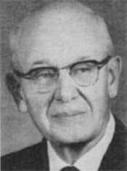
Pastor Henry Stoll was
installed July 3, 1966 at a salary of $4,800. During his first year, Pastor Stoll started a Couples Club for
the young (and young-at-heart) married couples of the church. This organization was in existence for
over 10 years. 1967 - 1976 It was decided that weekday
confirmation students should study for three years before being
confirmed. The school debt was down
to $2,700 after almost $14,000 had been paid off during the last three
years. In April 1968, the school held
a mortgage burning and open house.
Due to the unrest in our Lutheran Church Missouri Synod concerning
doctrinal matters, it was resolved to join in the resolution not to
participate in altar and pulpit fellowship with the American Lutheran
Church. The church received new
carpet in the balcony and stairway, the chancel, and center aisle. |
||||||||||||
|
Camp Luther opened in 1969
near Schuyler. The altar curtain was replaced
to match the new carpet, and Pastors and Teacher's salaries were increased $1
000 above the budgeted amount.
Organists were paid $3 per service, and it was decided to build a new
parsonage. The congregation also made
the decision to give $1,000 for five years for a room in the Omaha Medical
Center. August 30, 1970 was set
aside to celebrate the 50th wedding anniversary of Pastor and Mrs. Eckhardt,
and Pastor's 50th year in the ministry.
The congregation ladies served the lunch for the open house and past
and present elders and their wives served the evening meal. In 1973, we observed Synod's 125th
anniversary. |
|||||||||||||
|
Parsonage 1971
|
The new parsonage, costing
$28,850, was dedicated in April 1971.
During the next six years, a 2-car garage was built for the teacher,
gates we re installed in the opening of the communion rail, the outside front
steps of church were carpeted, individual Communion ware was purchased, and
the glass doors were installed.
Pastor and Mrs. Eckhardt gave the church an eternal light for the
chancel, and the teacher's house was remodeled and air conditioning
installed. A church library was again
organized by a group of congregational ladies, and it was decided that ushers
would be appointed by council instead of elected. In 1974 Pastor Stoll
accepted a call to McGregor, Iowa, and in Jan. 1975, Rev. Paul Kern was
installed. |
||||||||||||
|
Pastor Paul Kern 1975-1978 |
Also that year, Eugene Eckhardt
was our Mission Sunday speaker, and we celebrated his 25th year in the
ministry. On June 29, 1976 the
church's 100th anniversary was celebrated.
Beverly Hartung was music director and William Niebuhr the
organist. He and his family presented
a musical program as part of the service.
Special projects that year included a pew back for the front pews, new
carpet for the altar area, and acoustical tile and recessed lighting in the
school basement. A half-day
kindergarten teacher was hired. |
||||||||||||
|
|
Principal Robert Lehman 1977-1982 1990-1992 |
1977 - 1986 The budget for 1977 was set
at $54,520 for home purposes. New
Year's Eve services were dropped.
Cards were introduced for announcing for communion instead of personally
announcing on Wednesdays. A portable
microphone was purchased for Pastor, and congregational officers no longer
included a Parking Committee. Robert
Lehman accepted our call and was installed as the now Principal after Mr.
Dehning left. Pastor Kern accepted a call
to Mt. Pulaski, Illinois in 1978 and Rev. Rodney Meske was called and was
installed later that year. In 1979,
the congregation built a $132,300 multipurpose building on to the school. |
|||||||||||
|
School and Multipurpose
Building 1979
|
Also that year,
confirmation questioning was changed to the Friday night before Confirmation,
and confirmands began the practice of reading essays on their confirmation
verses to the congregation. Each
confirmand also makes a banner depicting their verse that is displayed in
church. Starting in 1980, communion
was offered twice a month, and the school centennial was celebrated that
March. Voters meetings were changed
to the third Sunday of the month.
Baptized membership was 425, confirmed members 309. The congregation started a Scholarship
program for our students going into church work. |
||||||||||||
|
Principal J.W. Einspahr 1982-1987 |
Robert Lehman accepted a
call in l982 to Texas, and J. W. Einspahr was installed as Principal, it was
decided that the confirmation classes would be acolytes for the church
services, 100 of the new Lutheran Worship hymnals were purchased, and a piano
was given to the church. We celebrated
Pastor's 10th year in the ministry in 1984. School children, trustees, and
the Board of Education planted 100 trees on the church and school property.
The loan balance on the gym remained at $33,900. A Vacation Bible School was
organized about 1985 and 77 children attended the first year. Over the years,
several of our congregational ladies have been in charge of the program and
many others help them. Ladies of the congregation help serve the noon meal
and several provide cookies and bars. A videotape ministry was started in
1986 with the donation of a camera. Since the beginning, Al Hagerbaumer, Dale
Moll, and Vernon Brandert have taken turns taping each Sunday service, and
volunteers take the videos to nursing homes and to our shut-ins. Later, a
television was set up in the basement to enable people in the social room to
view the service. |
||||||||||||
|
1987 - 1996 The basement classroom was
carpeted, a Greeter's program organized, a flagpole was placed in the
cemetery, and Miss Knaack accepted the head teacher position when Mr. Einsphar
left in 1987. In 1988, total baptized
members were 383 and communicant members 281. Our gym debt stood at $20,000, and the 50-year old organ
received major repairs. We repaired
the flat roof on the church, spent $11,600 to tuck-point, clean, and seal the
exterior brick, and $1,000 to replace the protective glass on the church
windows. Emergency lighting was
installed in the church and gym.
Total receipts for the year were $188,346 and disbursements, $182,765. In 1990, a fourth classroom
was created and Robert Lehman was again called as Principal. The church received pew cushions, and a
new fire alarm system was placed in the school. We honored Vivian Stuenkel for her service to the congregation
over the years and her retirement as Parish secretary, and Pastor and Mrs.
Eckhardt on their 70th anniversary and Pastor's 70th year in the ministry. The church was
air-conditioned and the gym debt was paid.
The Cemetery committee reported there were 786 gravesites and 140 not
purchased. Cost was $50 per
site. Mailboxes were installed in the
narthex and the church underground fuel tanks removed. It was decided that individual cups would
be used for communion the second Sunday and both common and individual cups
would be offered the last Sunday of each month. An Endowment Fund was established, and we transferred our
missionary commitment from Tom Brinkley to Amy Hartwig. Mr. Lehman accepted a call to Missouri and
Miss Knaack again became the Head Teacher. It was decided that the
Altar Committee and Courtesy Committee would be composed of ladies of the
congregation, instead of just the Ladies Aid. A handicap ramp was built on the southwest corner of church
costing $9,300, and the constitution by-laws were changed to read "every
male age 19 and over are voting members." In 1992, the Helping Hands
Committee was organized, and grew from 7 to 32 members the first year. Besides providing an occasional meal for
families, they provide rides to doctors, to church and for groceries. For the past three years, they have hosted
potluck Christmas dinners for those who will be "home alone" that
day; and two years ago, their annual Community Get Acquainted night was first
held for members and our neighbors.
The first year, there were 96 in attendance. In 1994, we had a total
baptized membership of 396 and 311 confirmed. The Endowment fund repaired the organ for $3,900 and replaced
the school hall floor for $5,000. The
Mother's room in church was changed to the "Media Room" with the
addition of a large bookshelf and cabinet for video and cassette tapes. In 1996, the Endowment fund
paid for the removal of the large Pines north of church and the planting of
new trees, resided the teacher's garage, and gave $1,000 to Lincoln High
School building fund. A Committee was
formed to implement the 12 Keys to an Effective Church" plan. 1997 -
PRESENT The trustees were kept busy
with projects during these last few years, Carpet was put in the church
social room, on the stage, and stairs, and new tile put in the kitchen and
restrooms. The church roof had to be
repaired after hail damage, and a keyboard was purchased for the church. By removing two rows of pews, the Narthex
was expanded and a handicap restroom added In 1998. We purchased 90 Bibles for
Russia and 2 wells for Ghana, West Africa.
Rev. Paul Krohn was the guest speaker for our observance of the 150th
Missouri Synod Anniversary, and Gene Panning was guest organist. The Endowment Fund sent $500 to Northeast
High School at Norfolk and $500 to Winnebago Youth. Total budget receipts were $228,800 and expenses $196.000.
Immanuel's committee to study the possibility of establishing a Fremont area
Lutheran High School are Pastor, Miss Knaack, David Bartling and Greg
Hoegermeyer. Early in 1998 a
committee was formed to start planning the church's 125th Anniversary to be
celebrated in the year, 2001.
Selected for this committee were Lowell Mueller, Gerald and Marilyn
Bohling, Gloria Kriete, Ruth Knaack, and Pastor Meske. They decided to build a gazebo and directory
for the cemetery, and a display case for the social room. A church directory will be published with
several pages of history added. Joyce
Oarman provided the anniversary theme and designed the logo. Now carpet was installed in
church and Pastor's study in early 1999.
It was decided to hold some of the voters meetings directly .4, after
the church service, and Saturday evening services with communion were started
once a month. We celebrated Pastor
Meske's 25th year in the ministry in June.
It was reported that the Endowment Fund was worth $66,000. A transmitter and four receivers were
given to the church for the hearing impaired. Our church membership
reflects the times and the way of life.
Families are much smaller, and sons may not be able to stay on the
farm, or choose not to. As people
retire, their farms are often sold to neighboring farmers and fewer new
families move into the area. When
people get older, they usually move to a near-by town instead of staying on
the farm or living with their families.
Sometimes it is easier for them to transfer their membership to a
church near their new home. We are
fortunate, though, to have very dedicated people living in Hooper and Fremont
who willingly offer rides every Sunday and to weekday meetings. We have enjoyed many new members in the
past few years that have come to us for their Spiritual care and guidance,
and we look forward to many more new members in the future. |
|||||||||||||

Typos, names, omissions? contact webmaster
IMMANUEL LUTHERAN CHURCH
THE LUTHERAN CHURCH
MISSOURI SYNOD